
The art world has always operated at the intersection of creativity, trust, and value. For centuries, transactions have depended on personal relationships, reputation, and often informal agreements. While this system has produced extraordinary cultural and financial outcomes, it has also left significant gaps—particularly in transparency, enforcement, and efficiency.
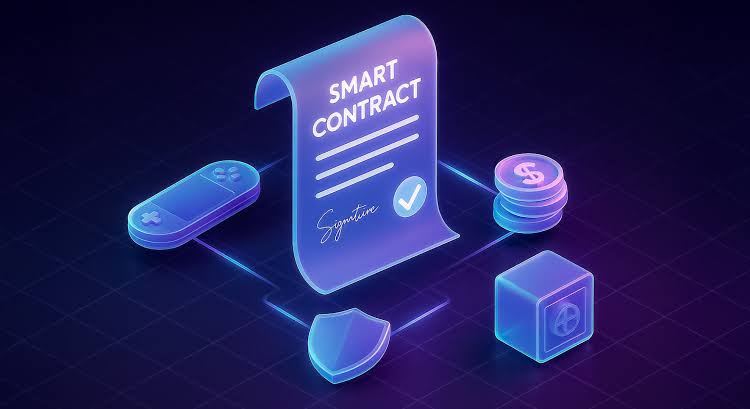
Today, a new technological layer is beginning to reshape that landscape. Smart contracts, powered by blockchain technology, are emerging as a tool that could fundamentally alter how art is created, sold, authenticated, and monetized. Their promise is not simply automation, but a redefinition of trust itself.
This question is no longer theoretical. Across galleries, auction houses, digital platforms, and legal practices, conversations are intensifying around whether smart contracts could become a new standard for both physical and digital artworks.
Understanding Smart Contracts Beyond the Hype
At their core, smart contracts are pieces of code designed to execute automatically when predefined conditions are met. The concept is deceptively simple: if a specific event occurs, a specific outcome follows. This “if–then” logic is already familiar in many forms of software, from automated payments to workflow systems.
What makes smart contracts different is where they operate.
When deployed on a blockchain, these contracts exist in a decentralized environment where their execution is not controlled by a single party. Instead, they are validated by a network, recorded transparently, and, in most cases, cannot be altered once deployed. This creates a level of certainty and reliability that traditional systems struggle to match.
In the context of art, this means that transactions, ownership transfers, royalty payments, and licensing agreements can all be encoded into a system that executes itself without requiring manual intervention or trust in intermediaries.
The implications of this shift are far-reaching.
The Art Market’s Longstanding Structural Challenges
To understand why smart contracts are gaining attention, it is important to recognize the structural inefficiencies that have long existed within the art world.
Unlike many other industries, art transactions are often fragmented and opaque. Documentation may be incomplete or inconsistent. Provenance—the history of ownership—can be difficult to verify, particularly for older works. Agreements between artists, galleries, and collectors are sometimes informal or undocumented, creating ambiguity around rights and obligations.
Enforcement is another persistent challenge. Even when formal contracts exist, ensuring compliance can be expensive and time-consuming. Legal disputes can take years to resolve, and outcomes are not always predictable.
These issues are not merely inconveniences. They represent friction points that slow down transactions, increase costs, and introduce risk. In a global market where artworks can change hands across jurisdictions, the complexity only increases.
Smart contracts offer a potential solution not by replacing the art market’s structure entirely, but by introducing a layer of clarity and automation that addresses some of its most persistent weaknesses.

Beyond NFTs: Expanding the Role of Blockchain in Art
Much of the public conversation around blockchain and art has focused on NFTs. While NFTs have demonstrated the potential of blockchain for ownership and digital scarcity, they represent only a narrow slice of what is possible.
The broader opportunity lies in integrating blockchain-based systems into the entire lifecycle of an artwork.
Imagine a painting that is accompanied by a digital record containing its provenance, condition reports, exhibition history, and ownership transfers—all securely linked and time-stamped. Each transaction involving that artwork could be recorded transparently, creating a living history that evolves over time.
Smart contracts could govern not only sales, but also loans, insurance agreements, and licensing arrangements. They could ensure that artists receive royalties automatically when their work is resold, regardless of where the transaction takes place.
This is not about digitizing art itself, but about digitizing the systems that support it.
The Legal Dimension: Code Versus Contract
One of the most important distinctions to understand is that smart contracts are not, in themselves, legal contracts. They are tools that can support and enforce aspects of legal agreements, but they do not replace the legal framework entirely.
Traditional contracts address issues such as jurisdiction, dispute resolution, and interpretation of terms—areas that code alone cannot fully capture. Human judgment remains necessary in situations where ambiguity or unforeseen circumstances arise.
However, smart contracts can significantly strengthen the execution layer of legal agreements.
Instead of relying solely on the possibility of legal enforcement after a breach occurs, parties can embed certain obligations directly into code. Payments can be released automatically when conditions are met. Access to digital assets can be granted instantly upon receipt of funds. This shifts the dynamic from reactive enforcement to proactive compliance.
In an industry where informal agreements are still common, the introduction of automated, verifiable processes can bring a new level of discipline and reliability.
Immutability and Its Implications
One of the defining features of blockchain-based smart contracts is immutability. Once deployed, they cannot easily be changed. This creates a form of certainty that is both powerful and, at times, challenging.
On one hand, immutability ensures that agreements cannot be altered unilaterally. It protects all parties by locking in the terms and preventing manipulation. In a market where trust is often based on reputation, this offers a more objective foundation.
On the other hand, it introduces rigidity.
Traditional contracts can be amended as circumstances evolve. Smart contracts require careful design upfront to anticipate potential changes. In response, developers have introduced the concept of “upgradeable” contracts, which allow certain modifications while preserving the original logic and record.
This balance between permanence and flexibility is one of the key areas where technology and legal thinking must align.
Transforming Stakeholder Relationships
The adoption of smart contracts has implications for every participant in the art ecosystem.
For artists, one of the most compelling benefits is the ability to receive royalties from secondary sales automatically. Historically, artists have often been excluded from the financial upside when their work appreciates in value. Smart contracts can change that by embedding royalty mechanisms directly into the transaction process.
For galleries, the potential lies in operational efficiency. Administrative tasks related to sales, documentation, and payments can be streamlined, freeing up time and resources to focus on curation, relationships, and strategy.
Collectors stand to benefit from increased transparency and security. Verified provenance, clear ownership records, and automated documentation reduce the risk associated with acquiring artworks, particularly in high-value transactions.
Museums and institutions can use blockchain-based records to enhance research, conservation, and exhibition planning. Access to reliable, time-stamped data can inform decisions and improve accountability.
What emerges is a more interconnected system where information flows more freely and trust is supported by verifiable data rather than assumption.
Rethinking Trust in the Art World
At a deeper level, the introduction of smart contracts represents a shift in how trust is constructed.
Traditionally, trust in the art market has been relational. It is built over time through networks, reputation, and experience. While this model has its strengths, it is not easily scalable and can exclude participants who lack access to established networks.
Smart contracts introduce a more systemic form of trust.
Instead of relying solely on who you know, trust can be derived from how the system operates. Transactions are transparent, rules are enforced automatically, and records are verifiable by all relevant parties.
This does not eliminate the need for relationships, but it changes their role. Trust becomes less about verifying actions after the fact and more about confidence in the system itself.
Challenges on the Path to Adoption
Despite their potential, smart contracts are not without limitations.
Technical complexity remains a barrier. Many participants in the art world are not familiar with blockchain technology, and the learning curve can be steep. User-friendly interfaces and education will be critical for broader adoption.
There are also economic considerations. Implementing blockchain-based systems requires investment, and the return on that investment is not always immediate. Smaller galleries or independent artists may find it difficult to justify the cost without clear, near-term benefits.
Legal and regulatory uncertainty adds another layer of complexity. As jurisdictions grapple with how to classify and govern blockchain-based transactions, participants must navigate an evolving landscape.
Finally, there is cultural resistance. The art world has long valued tradition, discretion, and personal relationships. Introducing a system that prioritizes transparency and automation challenges these norms.
A Gradual Evolution, Not an Overnight Revolution
It is unlikely that smart contracts will replace existing systems overnight. The more realistic scenario is a gradual integration, where blockchain-based tools are adopted in specific areas where they provide clear value.
Early use cases may focus on high-value transactions, digital art markets, and cross-border deals where transparency and efficiency are particularly important. Over time, as familiarity increases and technology matures, adoption may expand to other segments.
The key is not to view smart contracts as a replacement for the art world’s existing structures, but as an enhancement to them.
Conclusion: A New Foundation for Art Transactions
Smart contracts have the potential to redefine how physical and digital artworks are managed, traded, and experienced. By embedding transparency, automation, and accountability into the system, they address many of the inefficiencies that have long characterized the art market.
However, their true impact will depend not only on technology, but on how the industry chooses to adopt and integrate them.
The future of art will not be determined solely by code. It will be shaped by the interaction between technology, law, culture, and human relationships.
Smart contracts are not a complete solution. But they represent a meaningful step toward a more transparent, efficient, and equitable art ecosystem.
And in a market where trust has always been essential, that shift may prove transformative.